

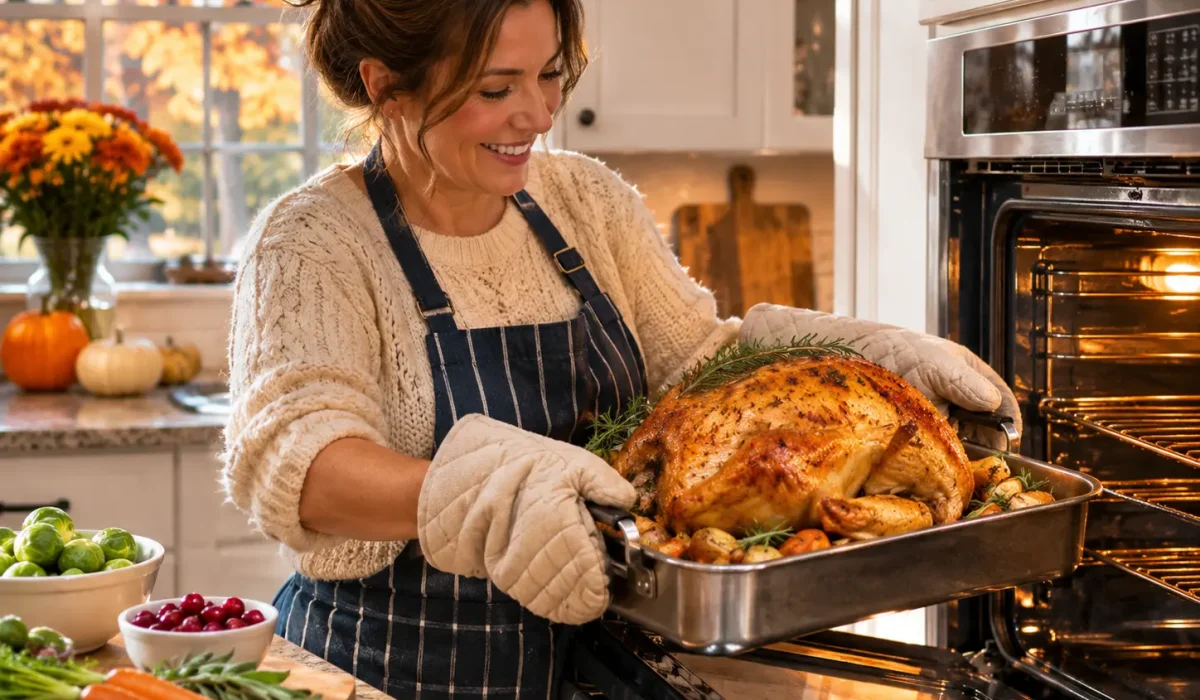
Thanksgiving is a day of gratitude, family, and food. But for the home cook pulling off the big meal across Northeast Philadelphia and Bucks County, it can also be a day that ends with an aching back, a stiff neck, and sore shoulders. If you’ve ever finished hosting Thanksgiving and felt like you’d run a marathon, you’re not imagining it. The holiday really is tough on your body.
Most people associate Thanksgiving kitchen injuries with cuts and burns, and those are real. But there’s a quieter category that sends plenty of people looking for relief in the days after: muscle and joint strains. Hours of standing, bending to lift a heavy turkey, leaning over counters to chop, and reaching into low ovens all add up. Lower back strains from lifting heavy turkeys and pans, along with neck and shoulder strain from long hours bent over counters, are among the most common holiday cooking injuries.
At Capstone Physical Therapy & Fitness, we’ve spent 19+ years helping Philadelphia and Bucks County residents stay pain-free and active. The good news is that a little awareness goes a long way. Here’s how to enjoy your Thanksgiving cooking without paying for it the next day.
What You’ll Learn
- Why Thanksgiving Cooking Is So Hard on Your Body
- The Most Common Holiday Cooking Strains
- How to Set Up Your Kitchen to Protect Your Body
- Safe Lifting and Movement in the Kitchen
- What to Do If You Tweak Something
- Why Philadelphia and Bucks County Residents Choose Capstone
- Frequently Asked Questions
Why Thanksgiving Cooking Is So Hard on Your Body
Cooking a holiday meal isn’t like making dinner on a weeknight. It’s hours of sustained physical effort, often in positions your body isn’t used to holding. Here’s what makes it so demanding:
- Prolonged standing on hard floors. Kitchen floors offer zero cushioning. Standing on tile or hardwood for hours sends that hardness straight up through your feet, knees, hips, and lower back, causing fatigue and stiffness.
- Repeated bending and lifting. A fully cooked turkey with the roasting pan can weigh 20 to 30 pounds or more. Hoisting it out of a low oven, often while bending and reaching at the same time, is exactly the kind of awkward heavy lift that strains the lower back.
- Sustained forward-leaning posture. Chopping vegetables, kneading, and prepping for long stretches keeps your head and shoulders bent forward over the counter. This forward-head posture loads the neck and upper back, and holding it for hours leads to real strain.
- Doing it all at once, out of practice. Most people don’t cook this intensely the rest of the year. Asking your body to do hours of unfamiliar physical work in a single day, without any conditioning, is a recipe for soreness and strain.
None of this means you should order takeout. It means a few smart adjustments can protect your body so you can focus on the people around the table instead of your aching back.
The Most Common Holiday Cooking Strains
At Capstone, these are the strains we see most often in the days following big holiday cooking:
- Lower back strain: The most common by far. Caused by lifting a heavy turkey or roasting pan, often combined with bending and twisting. Weak core muscles that can’t support the spine make it worse.
- Neck and upper back strain: From hours of looking down and leaning forward over the counter while chopping and prepping. The forward-head position strains the muscles that hold your head up.
- Shoulder strain: From reaching into ovens, lifting heavy pots, stirring for long periods, and reaching overhead for serving dishes and ingredients.
- Foot, knee, and leg fatigue: From standing on hard floors for hours without a break, which also contributes to lower back pain as your posture breaks down.
- Wrist and forearm strain: From repetitive chopping, peeling, mixing, and gripping over a long cooking session.
What most people don’t realize is that these strains are connected. Sore, tired feet change how you stand, which stresses your knees and lower back. A forward-leaning posture over the counter pulls on your neck and shoulders at the same time. This is exactly why, when pain lingers, Capstone’s whole-body assessment finds the real source rather than just chasing the spot that hurts.
How to Set Up Your Kitchen to Protect Your Body
A few simple changes to your kitchen setup and routine can dramatically reduce the strain of a long cooking day.
Stand Smarter
Place an anti-fatigue mat where you’ll be standing most, like in front of the counter or stove. It cushions hard floors and encourages the small movements that keep your legs from stiffening. Wear supportive shoes with good arch support instead of slippers or going barefoot. And prop one foot on a low step or open cabinet base for a few minutes at a time to relieve pressure on your lower back.
Set Up Your Workspace at the Right Height
Leaning over a too-low counter is a major cause of back and neck strain. If you’re doing a lot of prep, work at the highest comfortable surface available. Keep your cutting board and ingredients close so you’re not constantly reaching. Pull the bowl or board toward you rather than hunching over it.
Keep Heavy Items Within Easy Reach
Before the big day, move the heavy pots, the roasting pan, and the serving dishes you’ll need to waist-level shelves. This avoids repeated deep bending or overhead reaching to retrieve heavy items while your hands are full and your attention is divided.
Take Micro-Breaks
Set a mental timer. Every 30 to 45 minutes, stand up straight, roll your shoulders back, and do a few gentle stretches. These small resets counteract the hours of forward-leaning and standing, and they keep strain from building up over the day.
Safe Lifting and Movement in the Kitchen
The turkey is the moment most backs get hurt. Keep these principles in mind for every heavy lift:
- Get help with the turkey and heavy pans. A loaded roasting pan is heavy and awkward. Ask someone to help, or slide it onto the open oven door first before lifting it fully.
- Bend at your hips and knees, not your back. Lower yourself to the oven or counter by bending your legs, keeping your back in its natural position.
- Keep the load close. Hold the turkey or pan close to your body. The farther it is from you, the more stress it puts on your spine.
- Never twist while carrying. Pivot with your feet to turn toward the counter instead of twisting your spine with the weight in your hands.
- Clear your path first. Before you lift the turkey, make sure the counter space is clear and the floor is free of spills so you’re not adjusting mid-lift.
What to Do If You Tweak Something
If you feel a strain during or after cooking, don’t panic, and don’t ignore it either. For a fresh strain, ice during the first 48 hours helps calm inflammation. After that, heat can relax tight, sore muscles. Gentle movement and light stretching usually help more than lying completely still, which tends to stiffen things up.
Most minor cooking strains ease up within a few days. But if your pain lasts longer, gets worse, wakes you at night, or comes with numbness or tingling, it’s time to see a physical therapist. Early treatment leads to faster recovery and keeps a holiday strain from becoming a lasting problem.
Pennsylvania’s Direct Access law means you don’t need a doctor’s referral. You can schedule an evaluation at Capstone directly and get back to feeling like yourself.
Why Philadelphia and Bucks County Residents Choose Capstone PT & Fitness
When holiday aches turn into something more, Capstone Physical Therapy & Fitness is where Northeast Philadelphia and Bucks County residents turn for relief. Since 2007, our approach has set us apart:
- One-on-one care every session —your therapist works exclusively with you for the full appointment
- Same therapist throughout treatment —no repeating your story or starting over with someone new
- Whole-body assessment —we find the real source of your pain, not just where it hurts
- Direct Access —no referral needed in Pennsylvania, so you can start right away
- Three convenient locations —in Philadelphia, Southampton, and Morrisville
- Fitness facility locations —supporting your strength and wellness beyond PT
As patient Mary Anne Wylie described her experience, it was like having a personal therapist. That’s what one-on-one care means at Capstone, dedicated attention and treatment built around you.
Frequently Asked Questions
Why does Thanksgiving cooking cause so much back and neck pain?
Thanksgiving cooking combines hours of standing on hard floors, repeated bending to lift heavy turkeys and pans, sustained forward-leaning over counters while chopping, and reaching into low ovens. This mix of prolonged static postures and awkward heavy lifting, often by people who don’t cook this way regularly, strains the back, neck, and shoulders.
What’s the safest way to lift a heavy turkey or roasting pan?
Keep the load close to your body, bend at your hips and knees rather than your back, engage your core, and lift with your legs. Never twist while holding the weight, pivot with your feet instead. For a heavy pan coming out of a low oven, get a second person to help or slide it onto the open oven door first.
How can I prevent back pain while cooking for hours?
Use an anti-fatigue mat, wear supportive shoes, take short breaks to stand up straight and stretch, alternate propping one foot on a low step, keep frequently used items at counter height, and avoid leaning over the counter for long periods. Small posture resets throughout the day prevent strain from building.
Do I need a doctor’s referral for physical therapy in Pennsylvania?
No. Pennsylvania’s Direct Access law allows you to see a physical therapist without a physician referral. At Capstone, you can schedule your evaluation immediately.
When should I see a physical therapist for cooking-related pain?
See a physical therapist if your back, neck, or shoulder pain lasts more than a few days, worsens over time, wakes you at night, or comes with numbness or tingling. Early treatment leads to faster recovery and prevents a holiday strain from turning into a chronic problem.
Should I use heat or ice for a cooking strain?
For a fresh strain with swelling, ice during the first 48 hours helps reduce inflammation. After that, heat can relax tight, sore muscles. Gentle movement usually helps more than complete rest. If pain is severe or persistent, a physical therapy evaluation can identify the cause and the right treatment.
Does Capstone accept my insurance?
Capstone accepts most major insurance plans and verifies coverage before your first visit. Call (215) 677-1149 with specific insurance questions.
Which Capstone location is closest to me?
Capstone has three locations: Northeast Philadelphia (10980 Norcom Road), Southampton (715 Cherry Lane), and Morrisville (201 Woolston Drive). We serve communities throughout Bustleton, Somerton, Fox Chase, Feasterville, Warminster, Richboro, Langhorne, Yardley, Levittown, and beyond.
Enjoy the Holiday, Not the Aftermath
A little planning keeps Thanksgiving cooking from leaving you sore for days. And if a holiday strain does linger, Capstone Physical Therapy & Fitness is here to help you feel better fast, so you can enjoy the rest of the season.
Schedule Your Evaluation:
- Call: (215) 677-1149
- Email: mark@capstoneptfit.com
- Online: www.capstoneptfit.com/contact-us
Choose Your Location:
- Philadelphia: 10980 Norcom Road, Philadelphia, PA 19154
- Southampton: 715 Cherry Lane, 1st Floor, Southampton, PA 18966
- Morrisville: 201 Woolston Drive, Suite 1A, Morrisville, PA 19067
What to Expect:
- Direct Access — no referral needed in Pennsylvania
- Insurance verification before your first visit
- One-on-one care with an experienced therapist
- Same therapist throughout your treatment
- Located in fitness facilities for long-term wellness
Serving Northeast Philadelphia and Lower Bucks County Since 2007
Get Better. Stay Better.
About the Author
Mark Donathan, PT, MS
Mark Donathan founded Capstone Physical Therapy & Fitness in 2007 with a simple mission: provide the personalized, one-on-one care that patients deserve. A 1999 graduate of Temple University’s physical therapy program, Mark has spent over 27 years helping Philadelphia and Bucks County residents recover from injuries, manage chronic pain, and return to active lives. His advanced training includes orthopedic physical therapy techniques and hands-on manual therapy approaches. Mark believes in treating the whole person, not just the symptom—finding root causes that other clinics miss.