

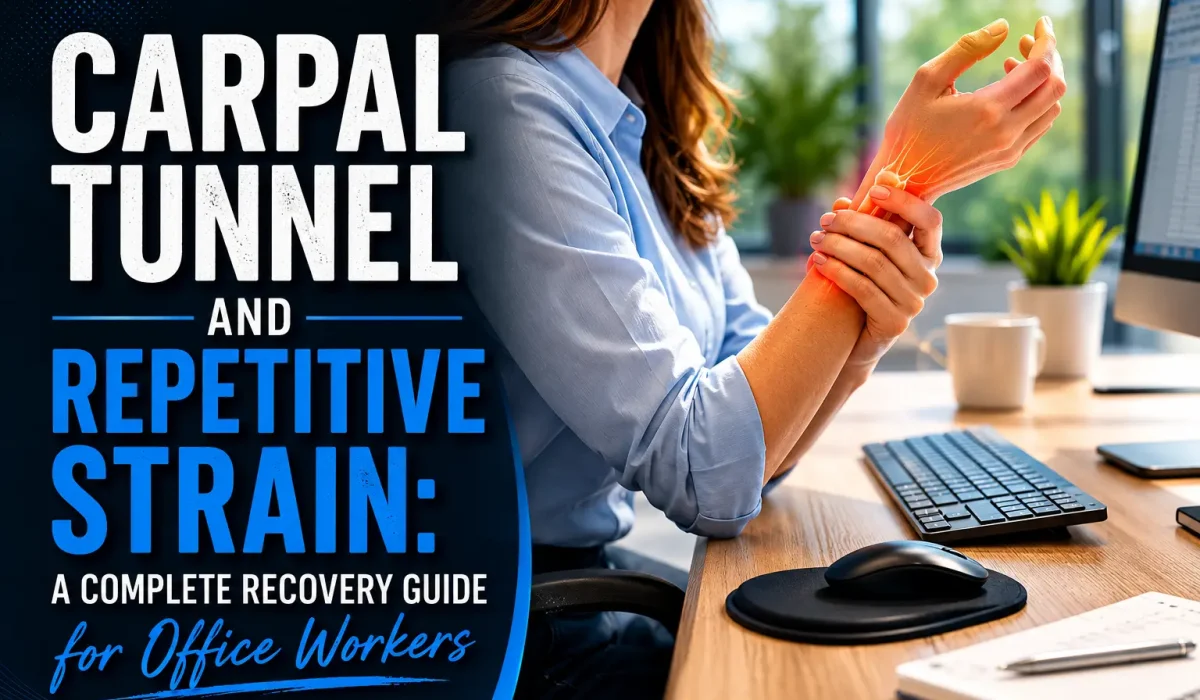
It starts small. A tingle in your fingers during a long typing session. A dull ache in your wrist by mid-afternoon. Maybe your hand goes numb while you’re scrolling through your phone at night. You shake it out, flex your fingers, and keep working—because it’s not that bad yet.
But here’s what happens when you ignore it: it gets worse. Carpal tunnel syndrome affects approximately five million American workers every year, and office workers who type, click, and grip a mouse for hours daily are among the most vulnerable. Left untreated, what begins as occasional tingling can progress to chronic pain, grip weakness, and permanent nerve damage that requires surgery.
At Capstone Physical Therapy & Fitness, we’ve spent 19+ years helping Philadelphia and Bucks County patients recover from carpal tunnel syndrome and repetitive strain injuries—often without surgery. The key is understanding what’s actually causing your symptoms, because the source isn’t always where you’d expect.
What You’ll Learn
- What Carpal Tunnel Syndrome Really Is (And What It Isn’t)
- Why Office Workers Develop Carpal Tunnel and Repetitive Strain
- Warning Signs You Shouldn’t Ignore
- How Physical Therapy Treats Carpal Tunnel Without Surgery
- Why Philadelphia and Bucks County Patients Choose Capstone
- Frequently Asked Questions
What Carpal Tunnel Syndrome Really Is (And What It Isn’t)
The carpal tunnel is a narrow passageway on the palm side of your wrist, formed by small bones on three sides and a tough ligament (the transverse carpal ligament) on top. Running through this tunnel are nine flexor tendons and one critical structure: the median nerve. This nerve controls sensation in your thumb, index finger, middle finger, and half of your ring finger, and it powers several small muscles at the base of your thumb.
Carpal tunnel syndrome occurs when the contents of this tunnel swell or the tunnel itself narrows, compressing the median nerve. The classic symptoms include numbness or tingling in the thumb, index, and middle fingers, pain that radiates from the wrist into the hand or up the forearm, symptoms that worsen at night or wake you from sleep, weakness in grip strength and difficulty with fine motor tasks like buttoning a shirt, and a tendency to drop objects.
What it isn’t: Not all wrist and hand pain is carpal tunnel. Tendinitis, cervical radiculopathy (a pinched nerve in the neck), thoracic outlet syndrome, and de Quervain’s tenosynovitis can all mimic carpal tunnel symptoms. This is why proper diagnosis matters—and why a thorough evaluation is your first step, not a wrist brace from the pharmacy.
Why Office Workers Develop Carpal Tunnel and Repetitive Strain
Understanding the real causes goes beyond “you type too much.” The mechanism is more complex than most people realize.
Repetitive Wrist Positioning
Typing and mousing keep your wrists in sustained extension or flexion for hours. Both positions increase pressure inside the carpal tunnel. Research shows that wrist extension beyond 30 degrees significantly raises intra-tunnel pressure on the median nerve. Most standard desk setups position the wrists well beyond this threshold, especially when using a keyboard that’s too high or a mouse that requires reaching.
Sustained Grip and Click Force
Gripping a mouse and clicking thousands of times per day creates repetitive micro-stress on the flexor tendons that run through the carpal tunnel. As these tendons swell from overuse, they crowd the median nerve. This is why symptoms often develop gradually over months or years—the damage is cumulative, not instant.
Poor Workstation Ergonomics
This is the cause we address most frequently at Capstone, especially since the shift to remote and hybrid work across Northeast Philadelphia and Bucks County. Laptop keyboards force wrist deviation. Dining tables and kitchen counters put monitors at the wrong height, causing compensatory neck and shoulder positioning that tightens the entire nerve pathway from your cervical spine to your fingertips. Improvised home offices are a repetitive strain factory.
The Neck and Shoulder Connection Most People Miss
Here’s what most people don’t realize: the median nerve doesn’t start at your wrist. It originates from nerve roots in your cervical spine, travels through your neck, past your shoulder, down your arm, through your elbow, and into the carpal tunnel. Compression or irritation at any point along this path can produce symptoms that feel exactly like carpal tunnel syndrome. In our experience at Capstone, a significant number of patients diagnosed with carpal tunnel actually have a cervical spine component contributing to their symptoms—or the nerve is being compressed at multiple sites simultaneously, a condition called double crush syndrome. This is exactly why a whole-body assessment matters.
Warning Signs You Shouldn’t Ignore
These symptoms warrant professional evaluation:
- Numbness or tingling that wakes you at night. Nighttime symptoms are a hallmark of carpal tunnel because sleeping with bent wrists increases pressure on the median nerve.
- Tingling that extends beyond the wrist into the thumb and first three fingers. This specific distribution follows the median nerve and distinguishes carpal tunnel from other conditions.
- Grip weakness or dropping objects. When the median nerve’s motor function is affected, the muscles at the base of your thumb weaken. This is a sign the condition is progressing.
- Symptoms that worsen with typing, mousing, or gripping. Activity-related symptom patterns confirm repetitive strain as a contributing factor.
- Pain radiating up the forearm toward the elbow. This suggests involvement beyond the carpal tunnel itself and warrants a comprehensive evaluation.
- Symptoms persisting despite a wrist brace. If splinting alone isn’t resolving your symptoms, there’s likely a contributing cause that needs professional assessment.
Early intervention is critical. Mild to moderate carpal tunnel responds well to conservative treatment. Once nerve damage progresses to the point of muscle wasting in the thumb, surgical intervention becomes more likely. Don’t wait.
How Physical Therapy Treats Carpal Tunnel Without Surgery
Research consistently shows that conservative treatment including physical therapy is effective for mild to moderate carpal tunnel syndrome. At Capstone, our approach addresses every contributing factor—not just the wrist.
Nerve Gliding Exercises
Specific exercises that gently mobilize the median nerve through its full pathway—from the cervical spine through the carpal tunnel. These techniques reduce adhesions around the nerve, improve nerve mobility, and decrease symptoms. Your therapist teaches you the exact movements and progression to perform at home between sessions.
Manual Therapy
Hands-on techniques targeting the wrist, forearm, elbow, shoulder, and cervical spine to restore mobility and reduce compression along the entire nerve pathway. Brian Kirby’s training in Functional Manual Reaction allows us to identify restrictions throughout the kinetic chain that standard wrist-only treatment would miss.
Wrist Splinting
Nighttime splinting in a neutral wrist position is one of the most effective conservative treatments. Many patients notice reduced nighttime numbness within the first week. Your therapist ensures proper fit and positioning for maximum benefit.
Ergonomic Assessment and Modification
We evaluate your workstation setup—whether it’s an office in Center City or a home desk in Richboro—and recommend specific changes to keyboard height, mouse position, monitor placement, and wrist positioning. Small adjustments often produce significant symptom reduction.
Strengthening and Conditioning
Targeted exercises strengthen the muscles that support healthy wrist mechanics and improve the endurance of your forearm muscles so they can handle sustained work without overloading the carpal tunnel. We also address any neck, shoulder, or upper back weakness contributing to the problem.
Why Philadelphia and Bucks County Patients Choose Capstone PT & Fitness
Office workers across Bustleton, Southampton, Feasterville, Langhorne, Yardley, and Morrisville trust Capstone Physical Therapy & Fitness because our approach goes beyond the standard wrist-only treatment:
- One-on-one care every session —your therapist works with you exclusively for the full appointment
- Same therapist throughout treatment —they understand your work demands, your symptoms, and your progress
- Whole-body assessment —we evaluate the full nerve pathway from cervical spine through carpal tunnel, catching contributing factors other clinics miss
- Ergonomic guidance —practical workstation modifications based on your actual setup
- Direct Access —no referral needed in Pennsylvania, so you can start immediately
As patient Paul Ferdinand described: “After a disappointing experience at another provider, we found Capstone. We are so glad we did.” That experience of personalized, thorough care is what every Capstone patient receives—whether you’re dealing with carpal tunnel, back pain, or any condition in between.
Frequently Asked Questions
Can physical therapy fix carpal tunnel syndrome without surgery?
Yes, in many cases. Research shows that conservative treatment including physical therapy is effective for mild to moderate carpal tunnel syndrome. Nerve gliding exercises, wrist splinting, manual therapy, and ergonomic modifications can significantly reduce symptoms and restore function. Surgery is typically reserved for severe cases that don’t respond to conservative care.
How long does carpal tunnel take to heal with physical therapy?
Many patients notice symptom improvement within 2–4 weeks. Full recovery for mild to moderate cases typically takes 6–12 weeks with consistent treatment and ergonomic changes. Severe or long-standing cases may take longer, and your therapist will set realistic milestones.
Do I need a doctor’s referral for physical therapy in Pennsylvania?
No. Pennsylvania’s Direct Access law allows you to see a physical therapist without a physician referral. At Capstone, you can schedule your evaluation immediately.
How do I know if my wrist pain is carpal tunnel or something else?
Carpal tunnel typically causes numbness and tingling in the thumb, index, middle, and ring fingers, often worse at night. Your Capstone therapist performs specific clinical tests to differentiate carpal tunnel from tendinitis, cervical radiculopathy, thoracic outlet syndrome, and other conditions that mimic CTS symptoms.
Can working from home cause carpal tunnel syndrome?
Yes. Remote workers often use improvised workstations with poor ergonomics—laptop keyboards, dining table desks, and unsupported wrist positions. These setups increase carpal tunnel pressure and accelerate repetitive strain. A physical therapist can evaluate your home workspace and recommend modifications.
What is the best sleeping position for carpal tunnel?
Avoid sleeping with your wrists bent or tucked under your pillow. A nighttime wrist splint keeps your wrist neutral and is one of the most effective conservative treatments. Many patients notice reduced numbness within the first week of nighttime splinting.
Does Capstone accept my insurance?
Capstone accepts most major insurance plans and verifies coverage before your first visit. Call (215) 677-1149 with specific insurance questions.
Which Capstone location is closest to me?
Capstone has three locations: Northeast Philadelphia (10980 Norcom Road), Southampton (715 Cherry Lane), and Morrisville (201 Woolston Drive). We serve communities throughout Bustleton, Somerton, Fox Chase, Feasterville, Warminster, Richboro, Langhorne, Yardley, and beyond.
Don’t Wait Until Typing Becomes Painful
If you’re experiencing wrist pain, numbness, or tingling from desk work, early treatment is your best path to a full recovery without surgery. At Capstone Physical Therapy & Fitness, we’ll find the real source of your symptoms and build a plan that gets you back to pain-free productivity.
- Call: (215) 677-1149
- Email: mark@capstoneptfit.com
- Online: www.capstoneptfit.com/contact-us
Choose Your Location:
- Philadelphia: 10980 Norcom Road, Philadelphia, PA 19154
- Southampton: 715 Cherry Lane, 1st Floor, Southampton, PA 18966
- Morrisville: 201 Woolston Drive, Suite 1A, Morrisville, PA 19067
What to Expect:
- Direct Access — no referral needed in Pennsylvania
- Insurance verification before your first visit
- One-on-one care with an experienced therapist
- Same therapist throughout your treatment
- Located in fitness facilities for long-term wellness
Serving Northeast Philadelphia and Lower Bucks County Since 2007
Get Better. Stay Better.
About the Author
Mark Donathan, PT, MS
Mark Donathan founded Capstone Physical Therapy & Fitness in 2007 with a simple mission: provide the personalized, one-on-one care that patients deserve. A 1999 graduate of Temple University’s physical therapy program, Mark has spent over 27 years helping Philadelphia and Bucks County residents recover from injuries, manage chronic pain, and return to active lives. His advanced training includes orthopedic physical therapy techniques and hands-on manual therapy approaches. Mark believes in treating the whole person, not just the symptom—finding root causes that other clinics miss.