

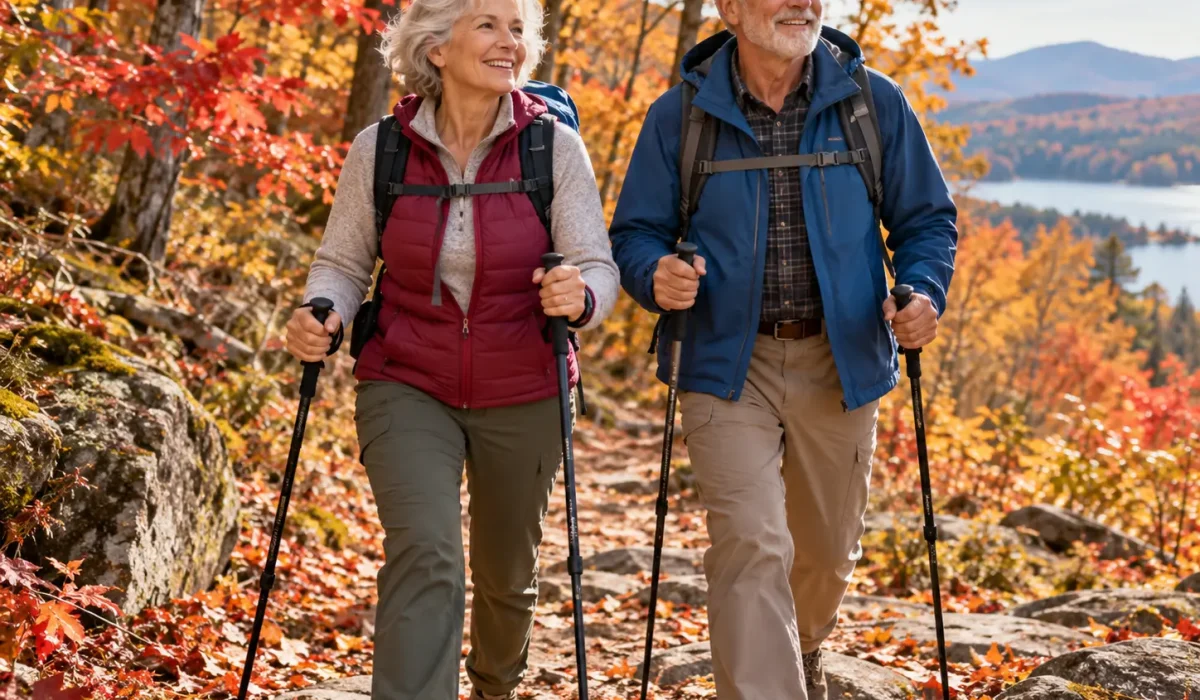
There’s no better time to be outdoors in Bucks County than fall. The crisp air, the changing leaves, and the beautiful trails at places like Tyler State Park, Core Creek Park, and the Delaware Canal towpath make autumn hiking one of the great joys of the season. For active seniors across Northeast Philadelphia and Bucks County, hiking is also one of the healthiest things you can do, building strength, balance, and heart health while keeping you connected to the outdoors.
But fall trails come with a hidden risk that’s worth taking seriously. Falls are the leading cause of injury for adults 65 and older, and more than one in four seniors experiences a fall each year. On uneven trails covered in wet leaves, hidden roots, and loose rocks, that risk climbs. The good news, as the CDC and National Council on Aging both emphasize, is that falls are not an inevitable part of aging. They can be prevented.
At Capstone Physical Therapy & Fitness, we’ve spent 19+ years helping Bucks County seniors stay active, independent, and on their feet. Here’s how to enjoy those gorgeous fall trails safely this season.
What You’ll Learn
- Why Fall Trails Pose a Unique Risk for Seniors
- The Body Changes That Increase Fall Risk (And Why They’re Fixable)
- How to Prepare Your Body Before Hiking Season
- On-the-Trail Safety Strategies That Work
- Warning Signs You Shouldn’t Ignore
- Why Bucks County Seniors Choose Capstone
- Frequently Asked Questions
Why Fall Trails Pose a Unique Risk for Seniors
Hiking is wonderful exercise, but fall trails present specific hazards that flat sidewalks and treadmills simply don’t. Understanding these challenges is the first step to handling them safely.
- Wet, slippery leaves. A beautiful carpet of fallen leaves also hides the trail surface and becomes dangerously slick when damp. Leaves conceal roots, rocks, holes, and uneven ground you’d otherwise step around.
- Uneven, unpredictable terrain. Unlike a smooth path, trails have roots, rocks, loose gravel, and sudden changes in grade. Each requires quick balance adjustments that become harder with age.
- Shorter daylight. Fall’s earlier sunsets mean reduced visibility if a hike runs long, making it harder to spot trip hazards.
- Cooler temperatures and stiff muscles. Cold weather tightens muscles and joints, reducing flexibility and reaction speed, especially early in a hike before you’re warmed up.
None of this means seniors should avoid the trails. It means a little preparation goes a long way toward keeping those hikes safe and enjoyable.
The Body Changes That Increase Fall Risk (And Why They’re Fixable)
Here’s what most people don’t realize: the increased fall risk that comes with age isn’t simply something you have to accept. It comes from specific, measurable changes, and nearly all of them respond to targeted training.
Declining Balance and Proprioception
Proprioception, your body’s sense of where it is in space, naturally declines with age. This is what allows you to adjust instantly when your foot lands on an uneven rock. The good news is that balance is highly trainable at any age. Research on evidence-based programs like the Otago exercise program shows that balance and gait improve significantly in older adults who train them, even those with compromised health.
Loss of Muscle Strength
Starting around age 50, adults lose muscle mass each year without active strengthening. Weak legs and hips mean less power to catch yourself when you stumble and less endurance on longer trails. Strength training reverses this, rebuilding the power your body needs to stay stable on uneven ground.
Slower Reaction Time
Reaction time slows with age, giving you a fraction of a second less to respond to a slip. While you can’t stop aging, you can train your neuromuscular system to respond faster through balance and agility work, effectively buying back some of that reaction time.
Vision Changes
Age-related vision changes make it harder to judge depth and spot hazards. Recent research confirms that vision impairment increases fall risk. Regular eye exams and choosing well-lit, well-maintained trails help compensate.
How to Prepare Your Body Before Hiking Season
The single best thing you can do to hike safely is to prepare your body before you hit the trail. A few weeks of focused work makes an enormous difference.
Build Lower-Body Strength
Exercises like sit-to-stands, step-ups, and supported squats build the leg and hip strength that stabilizes you on uneven terrain. Strong glutes and quads are your first line of defense against a stumble becoming a fall.
Train Your Balance
Simple balance exercises, practiced daily, retrain the systems that keep you upright. Standing on one foot while holding a counter, heel-to-toe walking, and gentle weight-shifting drills all build the stability trails demand. A physical therapist can progress these safely as you improve.
Improve Flexibility and Mobility
Tight hips, calves, and ankles limit your ability to adapt to uneven ground. Gentle daily stretching keeps these areas mobile so your body can respond to whatever the trail throws at it.
Get a Balance and Strength Assessment
If you’ve noticed any decline in your steadiness, or you’ve had a fall or near-fall, a professional assessment is the smartest first step. At Capstone, our balance and fall prevention evaluations identify exactly where your stability needs work and build a plan to address it. Pennsylvania’s Direct Access law means no referral is needed.
On-the-Trail Safety Strategies That Work
Once you’re prepared, these practical strategies keep you safe during the hike itself:
- Use trekking poles. Two poles provide extra points of contact with the ground, dramatically improving stability on uneven terrain and taking pressure off your knees on descents.
- Wear proper footwear. Supportive hiking shoes or boots with good tread and ankle support give you traction and protect against rolled ankles. Avoid worn-out soles.
- Choose trails that match your ability. Start with well-maintained, flatter paths like the Delaware Canal towpath. Build up to more challenging terrain gradually.
- Hike with a partner. A companion provides help if you need it and makes the hike more enjoyable. Always tell someone your route and expected return.
- Watch your footing on leaves. Step carefully through leaf-covered sections, assuming hazards may be hidden underneath. Slow down on wet or downhill stretches.
- Start early and pace yourself. Give yourself plenty of daylight, take breaks, and turn back before you’re exhausted. Fatigue is when most stumbles happen.
Warning Signs You Shouldn’t Ignore
Pay attention to these signs that your balance or strength may need professional attention before you hit the trail:
- A recent fall or near-fall, even if you weren’t hurt
- Feeling unsteady, dizzy, or needing to hold onto things when you walk
- Noticing you’ve been avoiding activities you used to enjoy because of balance concerns
- Leg weakness or difficulty rising from a chair without using your arms
- Pain in your hips, knees, or ankles that affects how you walk
Fewer than half of older adults who fall tell their doctor. Don’t let embarrassment keep you from getting help. A fall or near-fall is valuable information, and addressing it early keeps you independent and on the trails you love.
Why Bucks County Seniors Choose Capstone PT & Fitness
For active seniors across Somerton, Southampton, Warminster, Richboro, Feasterville, Langhorne, Hatboro, Yardley, and Morrisville who want to keep enjoying the outdoors, Capstone Physical Therapy & Fitness is the trusted choice:
- Specialized balance and fall prevention programs —keeping you steady, confident, and independent
- One-on-one care every session —your therapist gives you their full attention
- Same therapist throughout treatment —they know your history, goals, and progress
- Whole-body assessment —we find the root causes of instability, not just the symptoms
- Personalized hiking-readiness programs —built around the activities you love
- Fitness facility locations —climate-controlled spaces for year-round conditioning
As our patient Lori Mu, an active 71-year-old, shared: “I’m an active 71 y.o. who likes to move, and with Mark’s help, I intend to keep on moving!” That’s exactly the kind of active, independent life we help our senior patients protect.
Frequently Asked Questions
Is hiking safe for seniors over 65?
Yes. Hiking is excellent for seniors, building strength, balance, and cardiovascular health. The key is choosing appropriate trails, preparing your body, using proper gear like trekking poles and supportive footwear, and knowing your limits. A balance and strength assessment helps ensure you’re ready for your chosen terrain.
How can seniors prevent falls while hiking?
Use trekking poles, wear supportive hiking shoes with good traction, choose well-maintained trails suited to your ability, hike with a partner, watch for roots, rocks, and wet leaves, and build your leg strength and balance before hiking season. A physical therapist can design a hiking-readiness program for you.
Do I need a doctor’s referral for physical therapy in Pennsylvania?
No. Pennsylvania’s Direct Access law allows you to see a physical therapist without a physician referral. At Capstone, you can schedule a balance and strength evaluation immediately.
What exercises help seniors prepare for hiking?
Balance exercises, lower-body strengthening like squats and step-ups, calf and hip strengthening, and core work all build the foundation for safe hiking. A physical therapist can assess your current balance and strength and create a personalized program.
Why are seniors at higher risk of falling on trails?
Age-related changes in balance, muscle strength, vision, and reaction time increase fall risk, and uneven trail terrain adds challenges flat sidewalks don’t. The good news is that falls aren’t an inevitable part of aging and can be significantly reduced through preparation.
What should I do if I’ve already had a fall or near-fall while hiking?
Don’t ignore it. A fall or near-fall is an important warning sign that your balance or strength may need attention. A physical therapy evaluation can identify the specific factors contributing to your instability and address them before a more serious fall occurs.
Does Capstone accept my insurance?
Capstone accepts most major insurance plans and verifies coverage before your first visit. Call (215) 677-1149 with specific insurance questions.
Which Capstone location is closest to me?
Capstone has three locations: Northeast Philadelphia (10980 Norcom Road), Southampton (715 Cherry Lane), and Morrisville (201 Woolston Drive). We serve seniors throughout Bustleton, Somerton, Fox Chase, Feasterville, Warminster, Richboro, Hatboro, Huntingdon Valley, Langhorne, Yardley, Levittown, and beyond.
Enjoy the Trails With Confidence This Fall
Bucks County’s fall trails are too beautiful to miss. With the right preparation, you can enjoy them safely for years to come. If you’d like to improve your balance and strength before hiking season, or you’ve had a fall or near-fall, Capstone Physical Therapy & Fitness is here to help.
Schedule Your Balance Evaluation:
- Call: (215) 677-1149
- Email: mark@capstoneptfit.com
- Online: www.capstoneptfit.com/contact-us
Choose Your Location:
- Philadelphia: 10980 Norcom Road, Philadelphia, PA 19154
- Southampton: 715 Cherry Lane, 1st Floor, Southampton, PA 18966
- Morrisville: 201 Woolston Drive, Suite 1A, Morrisville, PA 19067
What to Expect:
- Direct Access — no referral needed in Pennsylvania
- Insurance verification before your first visit
- One-on-one care with an experienced therapist
- Same therapist throughout your treatment
- Located in fitness facilities for long-term wellness
Serving Northeast Philadelphia and Lower Bucks County Since 2007
Get Better. Stay Better.
About the Author
Mark Donathan, PT, MS
Mark Donathan founded Capstone Physical Therapy & Fitness in 2007 with a simple mission: provide the personalized, one-on-one care that patients deserve. A 1999 graduate of Temple University’s physical therapy program, Mark has spent over 27 years helping Philadelphia and Bucks County residents recover from injuries, manage chronic pain, and return to active lives. His advanced training includes orthopedic physical therapy techniques and hands-on manual therapy approaches. Mark believes in treating the whole person, not just the symptom—finding root causes that other clinics miss.