

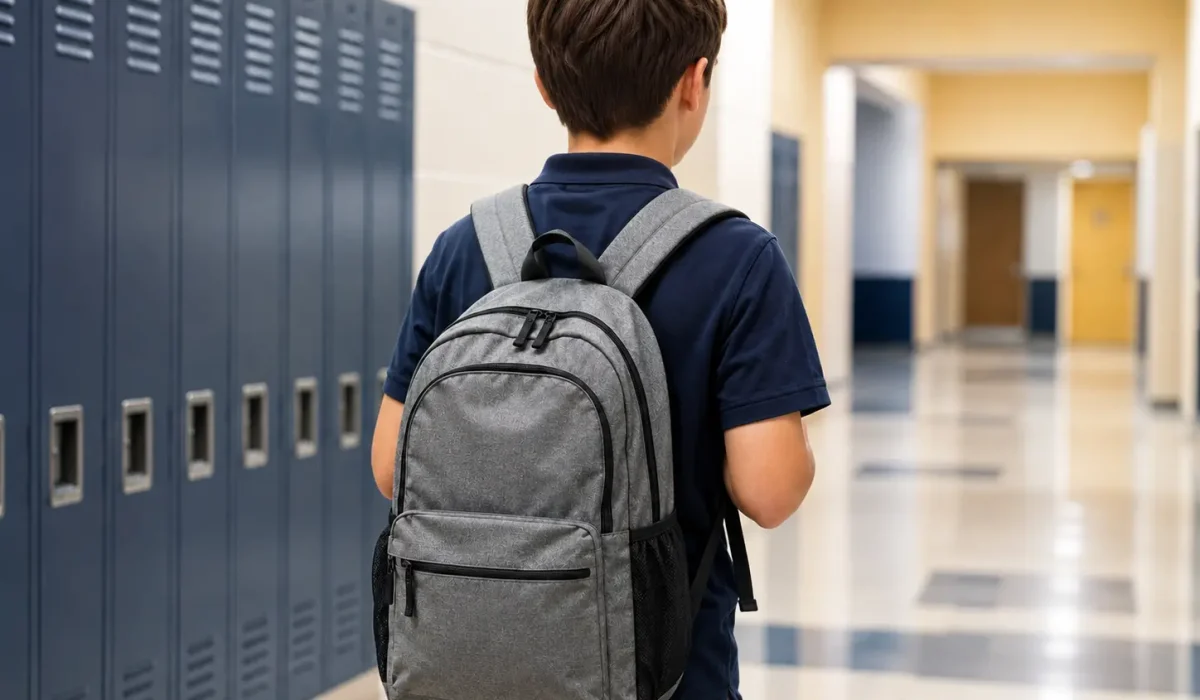
It’s back-to-school season across Northeast Philadelphia and Bucks County, and along with new sneakers and fresh notebooks, your child is likely hauling a backpack loaded with textbooks, a laptop, sports gear, water bottles, and who knows what else. For student athletes—kids already putting extra demands on their growing bodies through sports—that heavy backpack can be the tipping point that leads to back and neck pain.
The numbers are eye-opening. Research shows that 30 to 50% of adolescents report pain related to backpack use, and studies estimate about half of all American school children carry backpacks that are too heavy. While experts recommend a loaded backpack weigh no more than 10 to 15% of a child’s body weight, the average kid’s backpack weighs closer to 20%. The Consumer Product Safety Commission has reported tens of thousands of backpack-related injuries treated each year.
At Capstone Physical Therapy & Fitness, we’ve spent 19+ years helping Philadelphia and Bucks County families keep their kids healthy and active. For student athletes especially, protecting a growing spine from unnecessary daily strain matters. Here’s what every parent needs to know this school year.
What You’ll Learn
- Why Heavy Backpacks Cause Back and Neck Pain
- Why Student Athletes Face Compounded Risk
- How Much Should Your Child’s Backpack Weigh?
- The Right Way to Choose, Pack, and Wear a Backpack
- Warning Signs That Warrant Professional Attention
- Why Philadelphia and Bucks County Families Choose Capstone
- Frequently Asked Questions
Why Heavy Backpacks Cause Back and Neck Pain
To understand the problem, it helps to understand how the spine works. The spine is a stack of vertebrae cushioned by discs that act as natural shock absorbers, held in a series of gentle curves that distribute load efficiently. When you add a heavy backpack, that balance gets disrupted.
Here’s what happens to your child’s body under a heavy load:
- The weight pulls them backward. To compensate, the child bends forward at the hips or arches the back, compressing the spine unnaturally and straining the muscles that fight to hold them upright.
- The head and shoulders round forward. A heavy pack pulls the shoulders back and down, prompting the head to jut forward. This forward-head posture dramatically increases strain on the neck and upper back—every inch the head moves forward multiplies the load on the neck muscles.
- One-shoulder carrying curves the spine. When kids sling a pack over one shoulder—which nearly all of them do—they lean to the opposite side to compensate. Over time, this asymmetrical loading strains the muscles unevenly and can contribute to functional changes in spinal alignment.
- Sustained pressure adds up. It’s not just the moment of lifting. Wearing a heavy pack for the walk to school, between classes, and home again means hours of daily sustained pressure on developing muscles and joints.
Why Student Athletes Face Compounded Risk
For kids who also play sports, the backpack problem doesn’t exist in isolation—it stacks on top of the physical demands they’re already managing.
They’re Already Under Physical Load
A student athlete’s body is already working hard through practices, games, and conditioning. Adding hours of daily backpack strain on top of that athletic load gives their muscles and joints even less time to recover. Fatigue and overload from one source make them more vulnerable to strain from the other.
Growth Spurts Increase Vulnerability
As we’ve discussed in our guides on youth overuse injuries, kids in the 11 to 16 age range are often in the middle of growth spurts, when bones lengthen faster than muscles and tendons can adapt. This creates tightness and altered mechanics. Adolescent girls are especially vulnerable during this window—they often weigh less than boys but carry the same heavy loads, meaning their backpacks represent a larger percentage of their body weight.
Poor Posture Undermines Athletic Performance
Here’s something many parents don’t realize: the forward-head, rounded-shoulder posture caused by heavy backpacks doesn’t just cause pain—it can undermine athletic performance. Proper posture and thoracic spine mobility are foundational to throwing, running, and nearly every athletic movement. A student athlete carrying poor postural habits into their sport is building on a compromised foundation.
How Much Should Your Child’s Backpack Weigh?
The guideline is simple and worth measuring: a loaded backpack should weigh no more than 10 to 15% of your child’s body weight, and the American Academy of Pediatrics recommends staying closer to 10%.
Here’s what that looks like in practice:
- A 60-pound child should carry no more than 6 to 9 pounds
- An 80-pound child should carry no more than 8 to 12 pounds
- A 100-pound child should carry no more than 10 to 15 pounds
- A 130-pound teen should carry no more than 13 to 20 pounds
Weigh your child’s loaded backpack on a bathroom scale at the start of the year. Most parents are shocked by what they find. If it exceeds the limit, it’s time to lighten the load—and the good news is that’s usually very doable.
The Right Way to Choose, Pack, and Wear a Backpack
Choosing the Right Backpack
Select a pack that’s no wider than your child’s back and no longer than their torso. Look for wide, padded shoulder straps, a padded back, and ideally a waist or chest strap to help distribute weight. Multiple compartments help distribute the load evenly rather than letting everything pile into one heavy mass.
Packing It Properly
Load the heaviest items—textbooks, laptops—closest to your child’s back, not out toward the outer pockets where they create a pulling force. Distribute weight across compartments. And critically, help your child clean out the pack regularly. Kids accumulate an astonishing amount of unnecessary weight—old papers, extra books, forgotten water bottles.
Wearing It Correctly
This is where most kids go wrong. Teach your student athlete to:
- Always use both shoulder straps—never sling it over one shoulder
- Tighten the straps so the pack sits high on the back, with the bottom resting about two inches above the waist
- Use the waist and chest straps if the pack has them
- Avoid letting the pack hang low and loose over the buttocks, which pulls the shoulders back and strains the lower back
A properly fitted backpack worn correctly is genuinely the safest way to carry a load for long periods. The problem is rarely the backpack itself—it’s how much goes in it and how it’s worn.
Warning Signs That Warrant Professional Attention
Watch for these signs that a backpack may be causing more than temporary discomfort:
- Persistent back, neck, or shoulder pain that doesn’t resolve with rest
- Tingling or numbness in the arms or hands, which may indicate nerve compression from heavy straps
- Visible posture changes—rounded shoulders, forward head, or leaning to one side
- Red marks or deep grooves on the shoulders from straps
- Struggling to put on or take off the backpack
- Complaints of pain during or after sports that may be connected to postural strain
Don’t dismiss persistent pain as “just growing pains.” If your child’s pain continues, a physical therapy evaluation can identify the cause and address it before it becomes a chronic issue. Pennsylvania’s Direct Access law means no referral is needed—you can schedule at Capstone directly.
Why Philadelphia and Bucks County Families Choose Capstone PT & Fitness
Parents across Somerton, Southampton, Warminster, Richboro, Feasterville, Langhorne, Hatboro, and Morrisville trust Capstone Physical Therapy & Fitness with their student athletes:
- One-on-one care every session —your child gets their therapist’s full attention, ideal for younger patients
- Same therapist throughout treatment —building trust and comfort with young patients
- Whole-body assessment —we find the root cause of your child’s back or neck pain, whether it’s postural, backpack-related, or connected to their sport
- Posture and movement education —we teach kids habits that protect their spines for life
- Family communication —we keep parents informed and involved throughout
Founded in 2007 by Mark Donathan, PT, MS, Capstone was built on the belief that every patient—including the youngest ones—deserves thorough, personalized care. Not a rushed assembly line.
Frequently Asked Questions
How much should a child’s backpack weigh?
A loaded backpack should weigh no more than 10 to 15% of a child’s body weight, and the American Academy of Pediatrics recommends staying closer to 10%. For a 100-pound student, that’s a maximum of 10 to 15 pounds. Studies show the average backpack weighs closer to 20%, significantly increasing pain risk.
What is the correct way to wear a backpack?
Always use both shoulder straps—never one. Tighten the straps so the pack sits high on the back with the bottom resting about two inches above the waist. Use waist and chest straps if available. The pack shouldn’t be wider than your child’s back.
Can a heavy backpack cause lasting damage to my child’s spine?
Carrying a backpack that’s too heavy or worn incorrectly over a school year can contribute to chronic back and neck pain, poor posture, and muscle strain. Slinging it over one shoulder can cause the spine to curve to compensate. Teenage girls during growth spurts are especially vulnerable.
Do I need a doctor’s referral for physical therapy in Pennsylvania?
No. Pennsylvania’s Direct Access law allows your child to see a physical therapist without a physician referral. At Capstone, you can schedule an evaluation immediately.
When should I take my child to a physical therapist for backpack-related pain?
Seek evaluation if your child has persistent back, neck, or shoulder pain, tingling or numbness in the arms, posture changes, difficulty with the backpack, or leans to one side. Persistent or worsening pain should never be dismissed as normal.
Are rolling backpacks better for kids?
Rolling backpacks can reduce spinal load and are good for heavy materials. However, they’re difficult on stairs and uneven surfaces, and some schools restrict them. A properly fitted, correctly worn traditional backpack within the weight limit works well for most students.
Does Capstone treat children and adolescents?
Yes. We regularly treat young athletes and students for back pain, neck pain, sports injuries, and posture-related issues. Our whole-body assessment identifies the root cause, and our one-on-one approach is ideal for younger patients.
Which Capstone location is closest to me?
Capstone has three locations: Northeast Philadelphia (10980 Norcom Road), Southampton (715 Cherry Lane), and Morrisville (201 Woolston Drive). We serve families throughout Bustleton, Somerton, Fox Chase, Feasterville, Warminster, Richboro, Hatboro, Huntingdon Valley, Langhorne, Yardley, Levittown, and beyond.
Start the School Year Pain-Free
A few simple adjustments can protect your student athlete’s spine all year long. And if your child is already dealing with back, neck, or shoulder pain, Capstone Physical Therapy & Fitness is here to help find the cause and fix it.
Schedule Your Child’s Evaluation:
- Call: (215) 677-1149
- Email: mark@capstoneptfit.com
- Online: www.capstoneptfit.com/contact-us
Choose Your Location:
- Philadelphia: 10980 Norcom Road, Philadelphia, PA 19154
- Southampton: 715 Cherry Lane, 1st Floor, Southampton, PA 18966
- Morrisville: 201 Woolston Drive, Suite 1A, Morrisville, PA 19067
What to Expect:
- Direct Access — no referral needed in Pennsylvania
- Insurance verification before your child’s first visit
- One-on-one care with an experienced therapist
- Same therapist throughout your child’s treatment
- Located in fitness facilities for long-term wellness
Serving Northeast Philadelphia and Lower Bucks County Since 2007
Get Better. Stay Better.
About the Author
Mark Donathan, PT, MS
Mark Donathan founded Capstone Physical Therapy & Fitness in 2007 with a simple mission: provide the personalized, one-on-one care that patients deserve. A 1999 graduate of Temple University’s physical therapy program, Mark has spent over 27 years helping Philadelphia and Bucks County residents recover from injuries, manage chronic pain, and return to active lives. His advanced training includes orthopedic physical therapy techniques and hands-on manual therapy approaches. Mark believes in treating the whole person, not just the symptom—finding root causes that other clinics miss.